Running a triathlon club: specifics and essential tools
 Co-founder of Hudlo15 de mayo de 20266 min de lecturaPor deporteArtículo en inglés
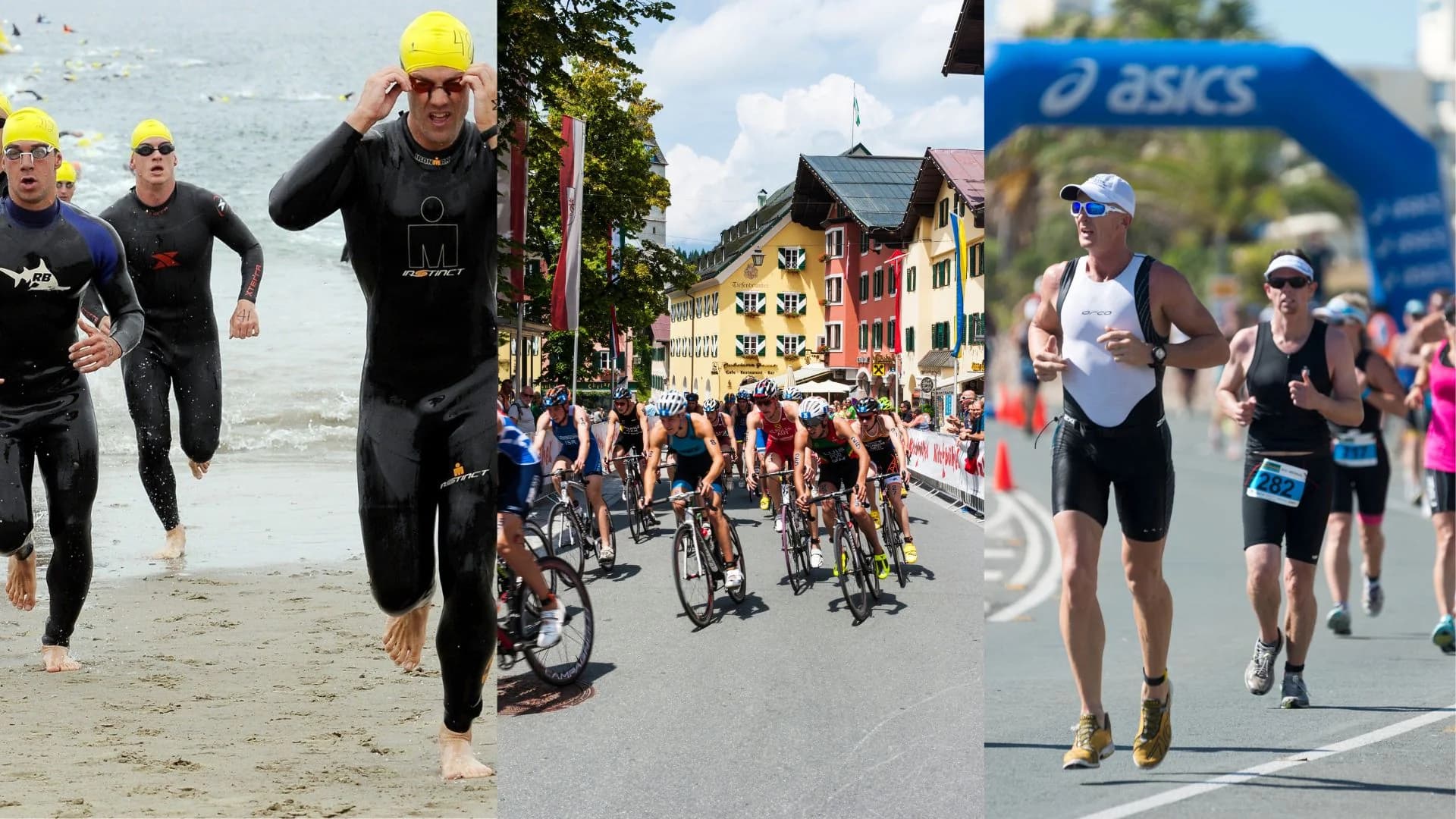
Running a triathlon club is both more complex and more rewarding than running a single-sport club. Three sports - swimming, cycling, running - mean three different environments, three types of equipment and three sporting cultures that have to coexist. And there's one organisational imperative many clubs underestimate: finding and keeping access to a swimming pool.
This guide is for leaders of clubs affiliated (or looking to affiliate) to the French Triathlon Federation.
The French Triathlon Federation (FFTri)
The FFTri is the delegated sports federation for triathlon in France. It covers not only triathlon (swim + bike + run), but also:
- Duathlon (run + bike + run)
- Aquathlon (swim + run)
- Aquabike (swim + bike)
- Cross triathlon (off-road)
- Winter triathlon (with cross-country skiing or snowshoes)
- Cyclo-cross duathlon
A club affiliated to the FFTri can offer all of these disciplines to its members. Affiliation goes through your FFTri regional committee; contact details are available at fftri.com.
The key question: access to a swimming pool
This is often the number one obstacle for triathlon clubs, especially in medium-sized towns. To train for the swim, you need regular access to a pool.
Negotiating an agreement with the municipal pool
Most triathlon clubs operate with a weekly slot at the municipal pool, negotiated with the town hall or the pool operator (often a public service delegation such as Vert Marine or Récréa).
What you need to set out in the agreement:
- Number of slots per week (and times)
- Number of lanes allocated
- Cost per slot or annual subscription
- What happens if the pool closes (works, summer period)
- Access for any competitions or training camps
Tip: involve your town hall from the start. If your club can show local interest (number of residents taking part, sporting results, triathlon school...), local authorities are often willing to help you negotiate a preferential rate.
Adapting swim training to the constraints
If your slots are limited, consider:
- Organising groups by level to make the most of each slot
- Alternating long sessions (endurance) with short technique sessions
- Pointing members to other pools if they want to train more often
FFTri licences: understanding the categories
Unlike other federations, the FFTri offers several licence options depending on the athlete's goal:
Tri-competition: the standard licence for taking part in official competitions (French Cups, regional and national championships). It includes personal accident insurance during competition.
Tri-leisure: for members who train without competitive goals. It covers club training, supervised outings and training sessions, but not entry into official ranked competitions.
Tri-youth: for under-15s, with adapted events (short distances, simplified rules).
Day pass: lets someone without a licence take part in a one-off event, by taking out insurance for the day.
For competitions, a competition licence and a medical certificate stating there is no contraindication to competitive triathlon are mandatory. The certificate must be renewed every 3 years (or annually if medically prescribed).
Coaching: are qualifications required?
For training sessions, the question of coaches' qualifications often comes up.
The law: teaching a physical or sporting activity for payment requires a State diploma (BPJEPS, STAPS degree, swimming DE...). For unpaid volunteers, the law doesn't require any diploma.
In practice: the FFTri offers club triathlon coach and official training courses that volunteers can take. These courses let them supervise training sessions with a good knowledge of the safety rules specific to triathlon.
For swimming specifically: pools sometimes require a qualified lifeguard (MNS) to be present during club slots. Clarify this when negotiating your agreement - some pools provide the lifeguard, others ask you to have one among your coaches.
The FFTri label system
The FFTri runs a club label system that recognises clubs according to their level of organisation and development. The system changes regularly, but broadly:
- Committed club: the first level, open to any affiliated club meeting basic criteria (coaching, association life, triathlon school...)
- Higher levels: progressive requirements on training quality, coach training, sporting results, gender balance or youth development
These labels have real value: they can make it easier to obtain municipal or regional grants, and they make the club more attractive to potential new members.
Ask your FFTri regional committee about the current criteria, which can vary from region to region.
Organising training across three disciplines
Swimming
Recommended frequency for recreational athletes: 1 session a week, 45 minutes to 1 hour in a 25 m pool. For competitors, 2 sessions is ideal.
Structure sessions with a warm-up, technique work (turns, push-offs, catch...) and an endurance or interval set depending on the time of year.
Cycling
Two formats coexist in triathlon clubs:
- Road rides: as in a cycling club, they require supervision and clear safety rules
- Turbo trainer / spinning sessions: handy in winter or for members who can't travel
In summer, organise long-distance rides and bike-run bricks (cycling followed straight by running) to simulate race conditions.
Running
The easiest discipline to organise: a park, a track, a street. Plan interval sessions, long runs and running technique sessions.
Triathlon bricks (two disciplines back to back) are specific to triathlon and should be part of your programme: mostly bike-run, sometimes swim-bike for clubs with access to open water.
Open-water swimming: strict rules
If your club organises open-water swim sessions (lake, sea, river), safety rules are essential:
- A coach trained in first aid must be present
- A safety boat (kayak, paddleboard, rowing boat...) for swims more than a few dozen metres from the shore
- No swimming alone
- Knowledge of regulated areas (no-swimming zones, navigation channels)
- Weather conditions and water temperature to be assessed before every session
The FFTri regularly publishes recommendations on open-water swimming. Read them and include them in your internal rules.
Competitions: how to enter your members
FFTri competitions are divided into several circuits:
- Regional and departmental events: organised by the regional committees, open to all licence holders
- French Triathlon Cup: national circuit over S/M/L distances
- French Championships: qualification required depending on the event
Competition entries are made via the federation extranet or dedicated online registration platforms (Sport Wizard, Klikego, Assoconnect depending on the event). As club manager, you can centralise entries for your members or let them enter individually.
To centralise entries, Hudlo's race entries portal gathers the season's races: members ask to race, the committee enters or declines them with a reason, and the CSV export produces the list. If a race has a price, the athlete can pay the entry by card when signing up; the club can also cover some athletes with a discount code. And each group (swim, bike, run, level) has its own chat, kept up to date automatically. See the club management features
Further reading
- Affiliating to a sports federation: step by step - The file, timescales and costs to affiliate your club
- Sports licences: everything your club needs to know - Licence types, documents to collect, the club's obligations
- Starting a cycling club - FFC, UFOLEP or FFCT: choosing your federation and affiliating