
Writing the statutes of a sports club: the complete 2026 guide
 Co-founder of Hudlo18 de junio de 20267 min de lecturaCrear un clubArtículo en inglés
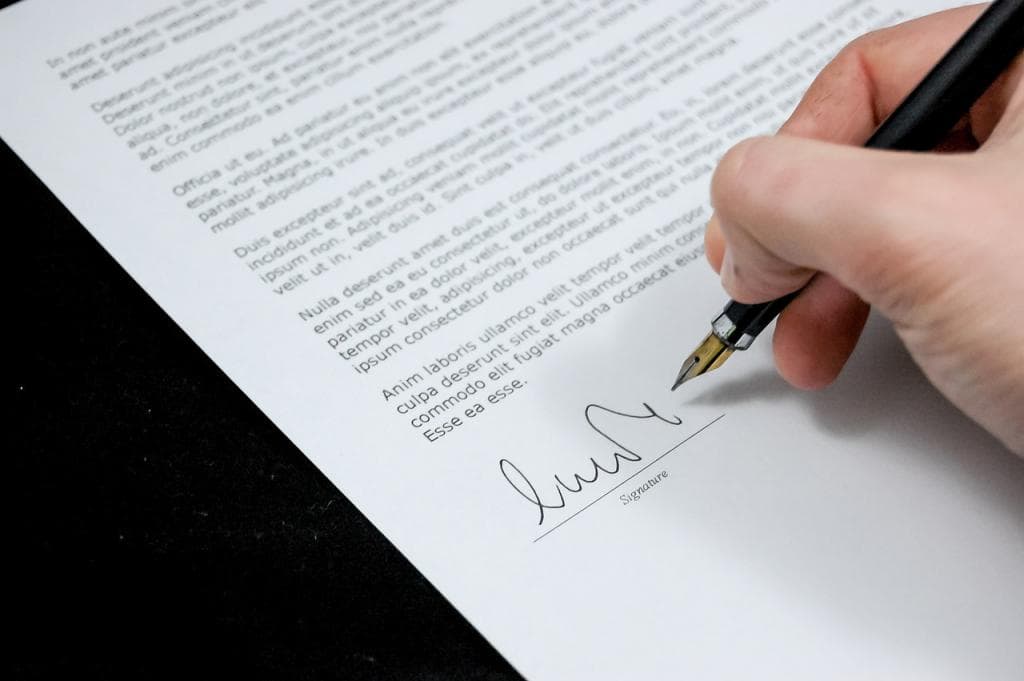
The statutes are your sports club's founding document. They set the rules of the game between all members, define how the club is governed and serve as the reference document in the event of a dispute. Yet many clubs write them in 20 minutes from a template copied off the internet - and regret it a few years later.
This guide explains what your statutes must contain under French law, the most common mistakes, and how to file them officially.
The 1901 law: your club's legal framework
Almost all sports clubs in France are loi 1901 associations, named after the law of 1 July 1901 on the contract of association. This law recognises the freedom of association between individuals, provided the aim pursued is not to share profits between members.
A sports club therefore cannot distribute dividends or profits. Any operating surplus must be reinvested in the association's purpose - in other words, in the sporting activity itself.
To exist legally, an association must:
- Draft its statutes
- File them with the prefecture or sub-prefecture where its registered office is located
- Have its creation published in the Official Journal of Associations and Corporate Foundations (JOAFE)
Since 2020, declaration and publication in the JOAFE are completely free, via the associations.gouv.fr portal.
What your statutes absolutely must contain
The mandatory items under Article 5 of the 1901 law
- The name of the association: your club's official name
- The purpose: a description of the sporting activity you organise
- The registered office: the club's legal address (it can be the president's home)
That is the strict legal minimum. In practice, statutes this short won't let a club run smoothly. Here's what to add.
Members
Specify the different categories of members if you plan to have several (active members, honorary members, benefactors), as well as:
- The conditions for becoming a member (age, possible sponsorship, payment of the membership fee)
- The expulsion procedure (non-payment, behaviour contrary to the club's interests)
- Whether or not an expelled member has a right of appeal
The association's resources
List the legal sources of funding: membership fees, public grants, donations, event income, revenue from activities.
Governance: the most important part
This is where many statutes fall short through lack of precision. Governance defines who decides what, and how.
The Ordinary General Meeting:
- Frequency (at least once a year)
- Notice conditions (notice period, method of sending)
- Quorum required for the meeting to be valid
- Majority required for resolutions to be adopted
The Extraordinary General Meeting:
- Cases where it is required (changing the statutes, dissolution)
- Quorum and majority, usually higher than for the ordinary meeting (often 2/3 of those present)
The Board of Directors (if you have one):
- Number of members (fixed, or between a minimum and a maximum)
- Length of terms and renewal conditions
- Role and powers of the board (day-to-day management between two general meetings)
The Committee (Bureau):
- Minimum composition: president, secretary, treasurer
- How they are appointed (elected by the board or directly by the general meeting)
- Each person's powers
Dissolution
Without a clear dissolution clause, closing the club can become a legal problem. Specify who receives the remaining assets once debts are settled - usually a similar association or a sports federation.
The committee: the three core roles
The president legally represents the association. They sign contracts, grant applications and official documents. They chair general meetings and board meetings.
The secretary handles official correspondence, writes meeting notices and general meeting minutes, keeps the membership register up to date and files amendment declarations with the prefecture.
The treasurer manages the accounts, prepares the forecast budget, keeps the books and presents the accounts at the annual general meeting. In associations of significant size, they often co-sign cheques with the president above a threshold set by the board.
The most common mistakes
An unrealistic quorum. Setting a quorum of 50% of members for the ordinary general meeting is a classic mistake. If your club has 150 members, you'll need 75 of them present for the meeting to be valid - which is often impossible. Go for 20 to 25% of members, with a clause providing for a second meeting with no quorum if the first one fails.
Committee powers that are too vague. "The committee handles day-to-day business" doesn't say who can sign a lease, take out a loan or hire an employee. Set clear thresholds.
Forgetting proxies. Without a proxy clause, an absent member can't be represented. Provide for them and limit the number of proxies per person (2 or 3 at most).
Not providing for a second meeting. If the general meeting doesn't reach quorum, you must be able to call a second one quickly, with no quorum requirement. Write it explicitly into your statutes.
Copying and pasting without adapting. Generic statutes may refer to committees or positions that don't exist in your club, creating confusion.
Amending the statutes
The statutes can only be amended by an Extraordinary General Meeting, called specifically for that purpose. Any change must be declared to the prefecture within 3 months using form Cerfa no. 13972 (or online at associations.gouv.fr).
That's precisely why you shouldn't put information that is likely to change regularly (membership fee amounts, training times) in the statutes. Those belong in the internal rules, which can be changed by a simple board decision.
Declaring to the prefecture
To declare your association:
- Go to associations.gouv.fr
- Fill in the creation declaration form
- Attach your statutes signed by at least 2 officers
- Attach the minutes of the founding General Meeting
- Wait for the declaration receipt (usual time frame: 5 to 15 working days)
Publication in the JOAFE then happens automatically. You'll receive an RNA number (National Register of Associations), which you need to open a business bank account.
Important: the RNA number is different from the SIRET number. If you want to employ staff, receive certain grants or issue VAT invoices, you'll need to obtain a SIRET number from INSEE. This process is free and separate from the prefecture declaration.
What comes next
The statutes set the legal framework. But a club's day-to-day life - training times, use of equipment, code of conduct - should be governed by internal rules that the board can change without going through the general meeting.
Once the club is created, you still need to open a bank account, get tools to manage memberships and payments, and possibly join a sports federation.
Statutes, declaration receipt, general meeting minutes: in Hudlo, they are stored in the club's documents, hidden from members, with access by role. They stay attached to the club, not to the person who uploaded them: every time the committee changes, nothing is lost. See the club management features
Further reading
- Writing your club's internal rules - What they should contain, and how to make them known
- Organising your club's general meeting - Notice, quorum, minutes: the steps to a smooth meeting
- Starting a sports club from A to Z - Statutes, declaration, bank, affiliation and insurance
- Committee handover: pass on the club, lose nothing - Logins, documents, bank and declaring the new officers