Starting a sports club from A to Z: the complete 2026 guide
 Co-founder of Hudlo1 mei 202612 min leestijdEen club oprichtenArtikel in het Engels

You're a group of enthusiasts who want to give your sport some structure. You're tired of paying for slots individually and want to share the costs. You'd like to offer a sports school in your town. Or you simply want to give your weekly outings an official framework.
Starting a sports club is simpler than it looks. You don't need to be a lawyer, an accountant or an admin expert. The French 1901 law on associations was designed precisely to make freedom of association easy.
Here are all the steps, in chronological order, to set up your sports club legally in France - without missing an obligation that could cost you dearly later.
Step 0: Check you really need a club
Before starting the paperwork, ask yourself these questions:
How many of you are there? Below 5 regular people, an informal setup is often enough. Beyond 10-15, a club becomes worthwhile to share costs and structure the organisation.
Do you need to be affiliated to a federation? If you want to take part in official competitions, federation affiliation (and therefore setting up a club) is mandatory. If you only do recreational sport with friends, you can stay informal.
Do you want to apply for public grants? Only declared associations can receive public funding. If you plan to ask for municipal or departmental support, official creation is essential.
Do you have a development project? A sports school, public events, commercial partnerships: these projects need a clear legal structure.
If you answered yes to at least two of these questions, starting a club is the right decision.
Step 1: Form the founding group (D-30)
A sports club is a loi 1901 association. To set one up, you need at least 2 adults (although in practice, 3-5 founders make the project more solid).
Who should be in the founding group?
Ideally, you'll have:
- A president (represents the club, signs official documents)
- A treasurer (manages the finances, keeps the books)
- A secretary (writes the minutes, handles the admin)
These three positions make up the minimum "committee". You can add positions as needed: vice-president, deputy secretary, communication lead, etc.
Good to know: nothing prevents one person from holding several roles at the start (e.g. president-treasurer). But as soon as the club grows, separate the roles to avoid concentrating power and overloading anyone.
Hold the first founding meeting
Even before the official creation, bring the founders together to:
- Agree on the shared project
- Define the club's purpose (cycling? trail running? triathlon?)
- Share out the roles
- Set the broad outlines: membership fee, target audience, ambitions
This meeting has no legal value, but it lays solid foundations for your future association.
Step 2: Write the statutes (D-20)
The statutes are your association's founding document. It's the legal document that defines how the club operates.
What the statutes must contain
Article 1 - Name of the association Choose a clear, unique, unprotected name. Check that no local association already uses it (search on the prefecture website or the INPI).
Examples: "Vélo Club de Villeurbanne", "Trail Runners Lyon", "Association Sportive Cycliste du Rhône"
Article 2 - Purpose Describe the activity precisely. Example: "The purpose of the association is the practice and development of road cycling and mountain biking, the organisation of group rides, participation in competitions and the training of young cyclists."
Watch out: a purpose that's too narrow can block you later. If you only write "road cycling", you won't be able to organise MTB events without amending your statutes. Think broad.
Article 3 - Registered office The club's administrative address. It can be the president's home (the most common solution at the start), the town hall if it provides you with an address, or premises if you have them.
Article 4 - Duration Write "unlimited". There's no point setting an end date.
Article 5 - Membership Who can join? Usually: "The association is open to any individual regardless of age, sex or nationality, subject to paying the annual membership fee and accepting these statutes."
Article 6 - Admission and expulsion Conditions for joining (paying the fee, committee approval) and conditions for exclusion (non-payment, behaviour contrary to the club's values).
Article 7 - Membership fees "The annual membership fee is set each year by the general meeting on the committee's proposal." NEVER put a fixed amount in the statutes (you'd have to amend them every time you change the price).
Article 8 - Committee Composition (president, treasurer, secretary + any deputies), election procedure, length of terms (usually 1 year, renewable).
Article 9 - General meeting Frequency (at least once a year), how notice is given (minimum notice period, method), quorum, voting.
Article 10 - Resources Where does the club's money come from? Membership fees, grants, donations, sponsors, events.
Article 11 - Dissolution If the club is dissolved, who receives its assets? Usually: "In the event of dissolution, the general meeting appoints one or more liquidators. The net assets are transferred to an association pursuing a similar purpose."
Use a template (but adapt it)
Most sports federations offer downloadable template statutes. They're an excellent starting point:
NEVER copy them word for word. Adapt them to your situation: name, purpose, local specifics.
Step 3: Write the internal rules (optional but recommended)
The internal rules complement the statutes on the practical aspects of day-to-day operation: training times, expected behaviour, disciplinary sanctions, use of equipment.
Unlike the statutes (which need a general meeting to be amended), the internal rules can be changed by a simple committee decision. Handy for adapting quickly.
Step 4: Hold the founding general meeting (D-15)
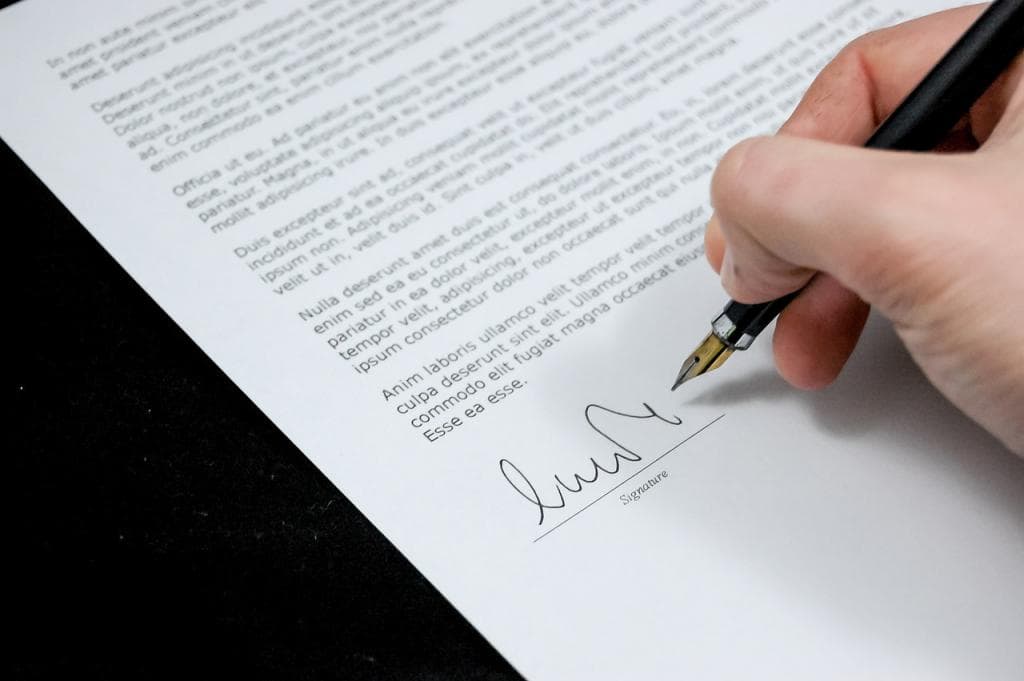
This meeting makes the club's creation official. It must be documented with minutes signed by at least 2 founders.
What the founding meeting minutes must include
- Date, time and place of the meeting
- List of people present (last name, first name, address)
- Appointment of a meeting chair and a meeting secretary
- Reading and adoption of the statutes (unanimous or majority vote)
- Election of the committee (president, treasurer, secretary)
- Setting the membership fee for the first year
- Any other business
- Signatures of the meeting chair and secretary
Keep this original safe. It's your club's birth certificate.
Step 5: Declare the association to the prefecture (D-10)
Your club exists on paper. Now it has to be officially declared to the State to exist legally.
Online declaration (recommended)
Go to service-public.fr > Associations > Créer une association
You'll need to provide:
- The signed statutes (PDF)
- The signed minutes of the founding meeting (PDF)
- The list of officers (identity, address, role)
- The registered office address
Processing time: 5 to 15 days depending on the prefecture.
Publication in the Official Journal of Associations (JOAFE)
Once the prefecture has approved your file, your association is automatically published in the Official Journal. You receive:
- A declaration receipt (proof of legal existence)
- An RNA number (National Register of Associations) = a unique registration number
Keep the receipt safe. You'll be asked for this document to:
- Open a bank account
- Apply for grants
- Affiliate to a federation
- Sign agreements
Step 6: Open a bank account (D-5)
No law requires a sports association to have its own bank account. But in practice, opening an account in the club's name is essential to:
- Keep the club's finances separate from the treasurer's
- Collect membership fees and pay suppliers
- Demonstrate financial transparency to elected officials
Banks suited to sports associations
Traditional banks:
- La Banque Postale (often recommended by town halls)
- Crédit Mutuel / Crédit Agricole (local branches)
- Fees: €30-80/year for an association account
Online banks (cheaper, more convenient):
- Shine, Qonto, Hello Bank…: compare each one's “association” plans, their prices change often
Documents needed to open the account:
- The prefecture declaration receipt
- Signed statutes
- Minutes of the founding meeting
- ID for the president and the treasurer
- Proof of address for the registered office
Step 7: Affiliate to a sports federation (D-1)
If you want to take part in official competitions, affiliation to a federation is mandatory.
The main federations by sport
- Cycling → FFC (French Cycling Federation)
- Athletics / Trail running → FFA (French Athletics Federation)
- Triathlon → FFTRI
- Swimming → FFN
- Rowing → FFA (French Rowing Federation)
Cost of affiliation
It varies between federations:
- FFC: around €150/year for a club with fewer than 50 licence holders
- FFA: free for clubs (licence holders pay their individual licence)
- FFTRI: around €100/year
What affiliation brings:
- The right to take part in federation competitions
- Civil liability insurance for the club
- Federation support and grants
- Access to training for volunteers
- Legitimacy with local authorities
The affiliation file
Prepare:
- The club's statutes
- The prefecture receipt
- The list of officers
- A civil liability insurance certificate (often provided by the federation itself)
- The club's bank details
Processing time: 2 to 4 weeks.
Step 8: Take out the mandatory insurance (D+7)
A sports club must be insured to cover its own civil liability and that of its members.
Civil Liability (RC) insurance - MANDATORY
Covers damage caused to third parties during club activities (injury to a member, property damage).
Where to get it?
- Usually included in the federation affiliation (check your certificate)
- Otherwise, through specialist insurers (MAIF, Groupama, MMA): €150-400/year
Personal Accident (IA) insurance - STRONGLY RECOMMENDED
Covers athletes' injuries (medical costs, disability). Often included in the individual federation licence, but check the limits.
Step 9: Organise your launch communication (D+15)
Your club legally exists. It's time to let people know.
Immediate actions:
- Create a Facebook / Instagram page
- Publish an announcement: "[Club name] is officially up and running! Join us for [activity]. First outing on [date]."
- Inform the town hall (book a meeting with the sports department)
- Contact the local newspaper for a short article
- Create a mailing list (email or WhatsApp) with the first members
Website (optional at the start): If you have neither the time nor the budget, a simple Facebook page is enough for the first year. But once you go beyond 30 members, invest in a real website or a platform like Hudlo that brings everything together.
Once the club is declared, its Hudlo space is created from a computer, in five steps of which only two are required. You become the club's manager, and the club appears in “Find a club”, where athletes can discover it and ask to join. Running the club is free, for life, with no member limit. See the club management features
Common mistakes to avoid
Forgetting to update your records when the committee changes. At every general meeting where you elect a new president or treasurer, you must declare the change to the prefecture (free, online).
Not calling the annual general meeting. French law requires at least 1 general meeting a year. Not holding it weakens your association legally.
Mixing personal and association accounts. ALWAYS use the club's bank account for expenses and income. Mixing flows exposes you to proceedings in the event of a tax inspection.
Not archiving important documents. Keep for 10 years: statutes, general meeting minutes, financial statements, receipts, contracts. If you're inspected, you need to be able to produce everything.
The complete checklist: have you done everything?
Before considering your club up and running, check these 15 points:
- Founding group formed (minimum 2 people)
- Statutes written and signed by the founders
- Internal rules written (optional but recommended)
- Founding general meeting held and minutes written + signed
- Prefecture declaration made online
- Declaration receipt received (RNA number assigned)
- Publication in the Official Journal confirmed
- Association bank account opened (bank details obtained)
- Sports federation affiliation submitted
- Civil liability insurance taken out (or included in the affiliation)
- Launch communication done (social networks, town hall)
- First members signed up (membership fees collected)
- Training schedule set
- First group outing organised
- Date of the next general meeting set (within 12 months at most)
If you can tick these 15 boxes, your club is legally created, insured and operational. The hardest part is done. Now, on to the sport.
How much does it really cost to start a club?
Minimum budget (recreational club <20 members):
- Prefecture declaration: €0 (free online)
- Bank account: €0-150/year (free online bank or traditional bank)
- Federation affiliation: €0-200/year depending on the federation
- Civil liability insurance: often included in the affiliation, otherwise €150-300/year
- First-year total: €150-650
These costs are more than covered by members' fees (10-20 members × €30-50 = €300-1,000).
Starting a sports club costs next to nothing. What costs is poor organisation and time wasted redoing paperwork that was done badly. Follow this guide to the letter, and you'll save dozens of hours.
Now it's over to you. Your club is just waiting for you to make it official.
Further reading
You've just started your club - here are the next key steps:
- Federation licences: everything your club needs to know - FFC, FFA, FFTRI: obligations, prices and included insurance
- Managing your club's finances stress-free - Budget, membership fees and bookkeeping for the treasurer
- Grants for sports clubs: the complete guide - Public funding available to any well-run club
- Writing a sports club's statutes - Mandatory items, governance, declaring to the prefecture
- Affiliating to a sports federation: step by step - The file, timescales and costs to affiliate your club
- Welcoming new club members without the paperwork - From the first request to the first ride, with or without a tool